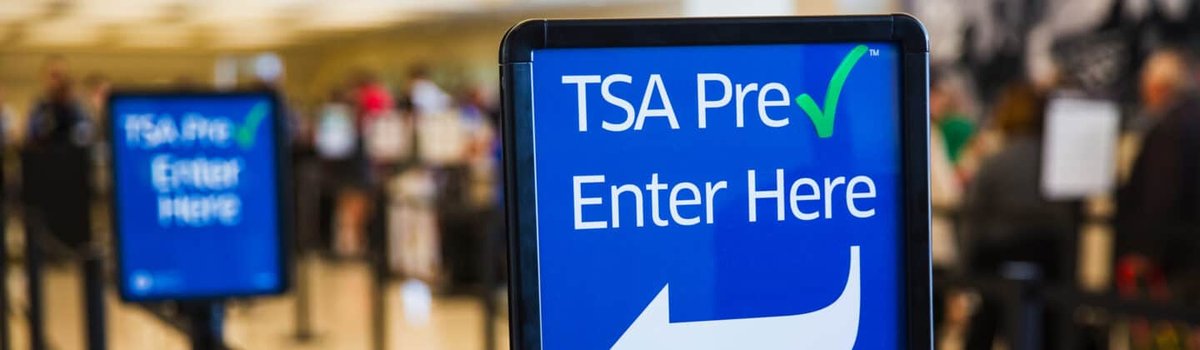
You’ve just booked your next flight, and the excitement builds. Then, a familiar dread creeps in: the security line. The endless shuffle, the awkward dance of removing shoes, belts, laptops, and that tiny bag of liquids. What if there was a way to bypass much of that friction? Enter TSA PreCheck, a program designed to streamline your airport experience. But beyond the promise of faster lines, understanding the TSA PreCheck cost, eligibility, and renewal process is crucial for any savvy traveler looking to reclaim their time and sanity at the airport.
In this comprehensive guide, we'll cut through the jargon and demystify everything you need to know about TSA PreCheck, from its origins to how it fits into the broader landscape of trusted traveler programs. We’ll explore who qualifies, how much it truly costs, the step-by-step application, and what to expect when it’s time to renew.
At a Glance: Key Takeaways for TSA PreCheck
- Cost: Initial application is $78. Renewal is $70 online or $78 in person. Valid for 5 years.
- Eligibility: Must be a U.S. citizen, U.S. national, or lawful permanent resident, and pass a background check.
- Benefits: Keep shoes, light outerwear, and belts on. Laptops and small liquids stay in bags. Quicker security lines (89% wait less than 5 minutes).
- Application: Online application followed by an in-person interview, fingerprinting, and payment.
- Renewal: Can be done online up to six months before expiration. Online renewal is cheaper.
- Children: Ages 12 and under can use the PreCheck lane with an enrolled parent; ages 13-17 often can too if on the same reservation and the PreCheck indicator is on their boarding pass.
- Important: Global Entry, NEXUS, and SENTRI automatically include TSA PreCheck benefits.
What Exactly Is TSA PreCheck, And Why Should You Care?
After the events of September 11, 2001, the Transportation Security Administration (TSA) was established under the Department of Homeland Security to secure commercial aviation. Over time, as security protocols evolved, so did the need for efficiency. Launched in October 2011, TSA PreCheck emerged as one of several "Trusted Traveler Programs," designed to pre-screen low-risk travelers and expedite their passage through airport security.
Unlike its counterparts like Global Entry, which are managed by U.S. Customs and Border Protection (CBP) and focus on international re-entry, TSA PreCheck is solely administered by the TSA. Its singular goal is to make your domestic airport departure smoother and faster.
Why You'll Love It: The Everyday Benefits of TSA PreCheck
Think about your last trip through airport security. The hassle of taking off your shoes, jacket, and belt. Pulling out your laptop, wrestling with the liquids bag. All of that becomes a distant memory with TSA PreCheck.
Members get to breeze through dedicated security lanes, enjoying these tangible advantages:
- Keep Your Shoes On: No more fumbling with laces or walking barefoot through the checkpoint.
- Outerwear Stays On: Light jackets and belts can remain on, saving precious seconds and a layer of awkwardness.
- Electronics Stay Put: Laptops and other large electronics can remain in your carry-on bag, simplifying the packing and unpacking process.
- Liquids Stay Packed: Your 3-1-1 compliant liquids bag can stay nestled inside your carry-on.
- Faster Lines: This is the big one. As of March 2023, a remarkable 89% of TSA PreCheck travelers waited less than 5 minutes at security checkpoints. That's more time for coffee, reading, or simply relaxing before your flight.
These benefits are available at over 200 airports nationwide and are honored by more than 80 participating airlines. It's worth noting, however, that TSA PreCheck is not available at airports outside the U.S. While the program dramatically improves efficiency, members may still be subject to random additional screening, as security is always the top priority. To fully understand the advantages, it's helpful to review the specific advantages of TSA PreCheck in detail.
Who Qualifies? TSA PreCheck Eligibility Requirements
Before you get excited about keeping your shoes on, let's talk about who can actually join the ranks of PreCheck members. The eligibility criteria are straightforward but critical:
- Citizenship/Residency: You must be a U.S. citizen, a U.S. national, or a lawful permanent resident (LPR). If you hold citizenship from certain other countries (e.g., Argentina, Brazil, Germany, India, Mexico, UK), you cannot directly apply for TSA PreCheck, but you can often obtain its benefits by applying for Global Entry instead.
- Background Check: Every applicant must successfully pass a comprehensive background check. This is where the "trusted traveler" aspect comes into play, ensuring that members meet specific security standards.
- Clean Record: Violations of transportation security regulations, or providing incomplete or false information during the application process, can lead to disqualification. Honesty and accuracy are paramount.
Do You Already Have PreCheck Benefits? Check These Programs
It's a common misconception that PreCheck is a standalone necessity for everyone. Many travelers might already have its benefits without realizing it! You do not need to apply for TSA PreCheck if you already possess one of the following:
- Global Entry: This program, ideal for international travelers, includes full TSA PreCheck benefits.
- NEXUS: Designed for efficient travel between the U.S. and Canada, NEXUS also grants you access to both Global Entry and TSA PreCheck.
- SENTRI: Offering similar benefits for the U.S.-Mexico border, SENTRI members also receive Global Entry and TSA PreCheck.
- TWIC® (Transportation Worker Identification Credential): Holders of an active TWIC card are eligible.
- Commercial Driver’s License (CDL) with a Hazardous Materials Endorsement (HME): If you have this specific CDL endorsement, you’re in.
For frequent international travelers, it's often more advantageous to pursue Global Entry, as it encompasses PreCheck benefits and expedites U.S. re-entry from abroad. We’ll delve deeper into comparing Global Entry and PreCheck later on.
The Price Tag: Understanding the TSA PreCheck Cost
Let's get down to the numbers. The TSA PreCheck cost is one of the most frequently asked questions.
The initial application fee for TSA PreCheck is $78. This fee covers the cost of the background check and administrative processing, and once approved, your membership is valid for 5 years. It’s important to note that this fee is non-refundable, even if your application is ultimately rejected.
When it comes time for TSA PreCheck renewal, the costs are slightly different:
- Online Renewal: Renewing your membership online costs $70.
- In-Person Renewal: If you choose to renew in person at an enrollment center, the fee is $78.
Opting for the online renewal saves you a bit of money, so keep that in mind as your expiration date approaches.
Getting Reimbursed: Credit Card Perks
Here’s a fantastic tip that many travelers overlook: numerous premium travel credit cards offer a statement credit to reimburse you for the application fee for either TSA PreCheck or Global Entry. This benefit typically refreshes once every five years, aligning perfectly with the program's validity period.
Before you apply, check with your credit card provider to see if this perk is included with your card. It's an easy way to get your membership essentially for free!
Your Step-by-Step Guide to Applying for TSA PreCheck
The application process for TSA PreCheck is designed to be straightforward, typically involving an online component and a quick in-person visit. Here’s how to navigate it:
- Online Application: Start by filling out an online form on the official TSA PreCheck website. You'll need to provide basic information like your citizenship status, current address, date of birth, and any relevant immigration documentation (if applicable).
- Note for Minors: For children aged 12 or younger, a parent or guardian must complete the online form or accompany them to an enrollment center for in-person enrollment. Online applications are not accepted directly for individuals under 13.
- Schedule Your Interview: After completing the online form, you'll be prompted to schedule an in-person interview at one of the many enrollment centers located nationwide. You can choose a convenient time and location.
- The In-Person Interview: This is a crucial step. When you attend your appointment, you’ll need to bring:
- A valid photo ID (e.g., driver's license, passport).
- Proof of U.S. citizenship (e.g., U.S. passport, birth certificate) or lawful permanent residency documentation.
- Any applicable immigration documents.
During this short interview, you'll answer a few basic questions about yourself and your travel habits, and your fingerprints will be taken for the background check.
- Payment: You'll pay the $78 application fee at the enrollment center during your interview. Remember, this fee is non-refundable.
- Notification: After your interview, the waiting game begins. Most applicants receive approval or denial notification within 3 to 5 days, though it can occasionally take up to 60 days. You can check your application status online using your application ID.
- Receive Your KTN: Upon approval, you will be issued a unique Known Traveler Number (KTN). This is your key to expedited screening. You can also explore how to obtain your Known Traveler Number more broadly.
- Use Your KTN: The final, vital step is to add your KTN to all your flight reservations. Input it when you book tickets online, or add it to your frequent flyer accounts so it automatically populates.
- Check Your Boarding Pass: It's essential that "TSA PreCheck" (or the PreCheck indicator) is printed directly on your boarding pass. If it's not, contact your airline's check-in desk for assistance, as this designation is required to access the dedicated PreCheck lane.
Keeping Your Status: The TSA PreCheck Renewal Process
Your TSA PreCheck membership is valid for five years, which means eventually, you'll need to think about TSA PreCheck renewal. The good news is that the renewal process is typically simpler than the initial application.
You can renew your membership up to six months before its expiration date. The TSA will usually send you reminders as your expiration approaches, but it’s always a good idea to mark your calendar.
Here's how renewal works:
- Online Renewal (Recommended): The most convenient and cost-effective option is to renew online. This process takes just a few minutes, provided your information hasn't changed significantly. The fee for online renewal is $70.
- In-Person Renewal: If you prefer, you can also renew in person at an enrollment center. This will cost $78, the same as the initial application. This might be necessary if your fingerprints need to be re-taken or if there are significant changes to your personal information.
Renewing online is highly recommended unless there's a specific reason you need to visit an enrollment center. Don't let your membership lapse, or you'll have to go through the full application process again!
Traveling with Little Ones: PreCheck for Children
Family travel can be chaotic enough without the added stress of airport security. Thankfully, TSA PreCheck offers some flexibility for children traveling with enrolled adults:
- Children Aged 12 and Younger: These young travelers may use the TSA PreCheck lane when they are traveling on the same reservation as a TSA PreCheck member. They do not need their own enrollment, as long as the adult member's boarding pass has the PreCheck indicator.
- Children Aged 13 to 17: Minors in this age group may also accompany an approved TSA PreCheck parent when they are on the same reservation, provided the TSA PreCheck designation appears on their boarding pass. In some cases, if the designation doesn't automatically populate for older children, the family might be directed to the standard lane.
- Enrolling Minors: If you wish for a child aged 12 or younger to have their own PreCheck membership (which is generally unnecessary if traveling with an enrolled adult), a parent or guardian must complete the online application form and accompany the minor to the enrollment center for the in-person interview.
This policy helps families stay together through security, reducing stress and speeding up the process for everyone.
PreCheck vs. The World: Comparing Trusted Traveler Programs
TSA PreCheck is just one piece of a larger puzzle known as the "Trusted Traveler Programs." Understanding the differences between these programs can help you choose the best fit for your travel needs. For a broader perspective on all available options, consider consulting the broader suite of Trusted Traveler Programs.
Here's a quick comparison:
| Program | Administered By | Cost (5 Years) | Primary Benefit | Includes PreCheck? | Best For |
|---|---|---|---|---|---|
| TSA PreCheck | TSA | $78 (new), $70 (online renewal) | Expedited airport security domestic flights | N/A | Frequent domestic air travelers |
| Global Entry | CBP | $100 ($120 from Oct 1, 2024) | Expedited U.S. Customs screening + includes PreCheck benefits | Yes | Frequent international air travelers |
| NEXUS | CBP (U.S./Canada) | $50 | Expedited U.S./Canada border crossing + includes Global Entry & PreCheck | Yes | Frequent travelers between U.S. & Canada |
| SENTRI | CBP | $122.25 | Expedited U.S./Mexico border crossing + includes Global Entry & PreCheck | Yes | Frequent travelers between U.S. & Mexico |
Which One Is Right For You?
- TSA PreCheck: If you only travel domestically and don't anticipate any international trips in the next five years, PreCheck is a cost-effective choice to streamline your airport experience.
- Global Entry: This is often the recommended option for any frequent traveler who flies internationally, even occasionally. For just a little more than PreCheck, you get all the PreCheck benefits plus expedited re-entry into the U.S. from abroad. Many credit cards that reimburse PreCheck fees also cover Global Entry.
- NEXUS/SENTRI: These are highly specialized for frequent cross-border travelers with Canada or Mexico, respectively, and provide the most comprehensive benefits for those specific routes, including all the perks of Global Entry and PreCheck.
Consider your travel habits carefully. If international travel is even a remote possibility, Global Entry offers superior value by encompassing PreCheck benefits and adding international re-entry efficiency.
Common Questions & Misconceptions About PreCheck
Even with clear guidelines, questions and myths often swirl around security programs. Let's address some of them head-on.
"What if 'TSA PreCheck' doesn't appear on my boarding pass?"
This is a critical point. The PreCheck indicator must be printed on your boarding pass to access the dedicated lane. If you have a KTN but it's not showing up:
- Check your reservation: Ensure your KTN is correctly entered into your flight reservation or frequent flyer profile. Even a typo can prevent it from appearing.
- Verify your name: The name on your flight reservation must exactly match the name you used for your TSA PreCheck application.
- Contact the airline: If all details are correct and it's still missing, speak to an airline agent at check-in or the gate. They can often add it.
- Random exclusion: On rare occasions, the TSA may randomly exclude an approved PreCheck traveler from the expedited lane for security reasons. This is infrequent but can happen.
"Is TSA PreCheck guaranteed to always get me through faster?"
While 89% of PreCheck travelers wait less than 5 minutes, it's not a 100% guarantee. Factors like peak travel times, airport operational issues, or even random security checks can occasionally affect wait times. However, it nearly always offers a significant improvement over standard lanes.
"Can I use PreCheck for international flights departing the U.S.?"
Yes, you can use TSA PreCheck for the departure leg of an international flight, as long as you're departing from a U.S. airport and the airline participates in PreCheck. However, PreCheck doesn't apply to security screening at foreign airports, nor does it expedite your re-entry into the U.S. from abroad (that's where Global Entry comes in).
"Do I need a physical PreCheck card?"
No. Your Known Traveler Number (KTN) is what identifies you. There's no physical card required for TSA PreCheck itself. You just need to ensure your KTN is correctly linked to your flight reservations.
"What if I forget my KTN?"
You can easily retrieve your KTN online through the official TSA website by entering your personal details. It's a good idea to keep it stored in your phone or a secure document.
The Bottom Line: Is TSA PreCheck Right for You?
Considering the TSA PreCheck cost, eligibility, and renewal process, the program offers a clear value proposition for many travelers. If you fly domestically even a few times a year, the savings in time, hassle, and stress can quickly outweigh the $78 initial fee (or even less if your credit card covers it).
No more fumbling with shoes and liquids, no more taking out your laptop. Just a smoother, more predictable start to your journey. For those who frequently navigate the complexities of airport security, enrolling in TSA PreCheck is less of a luxury and more of a strategic travel decision. Before your next trip, weigh your options, check your credit card benefits, and consider making airport security a significantly less daunting part of your travel experience. You might also find value in exploring general airport security tips to further enhance your travel experience.