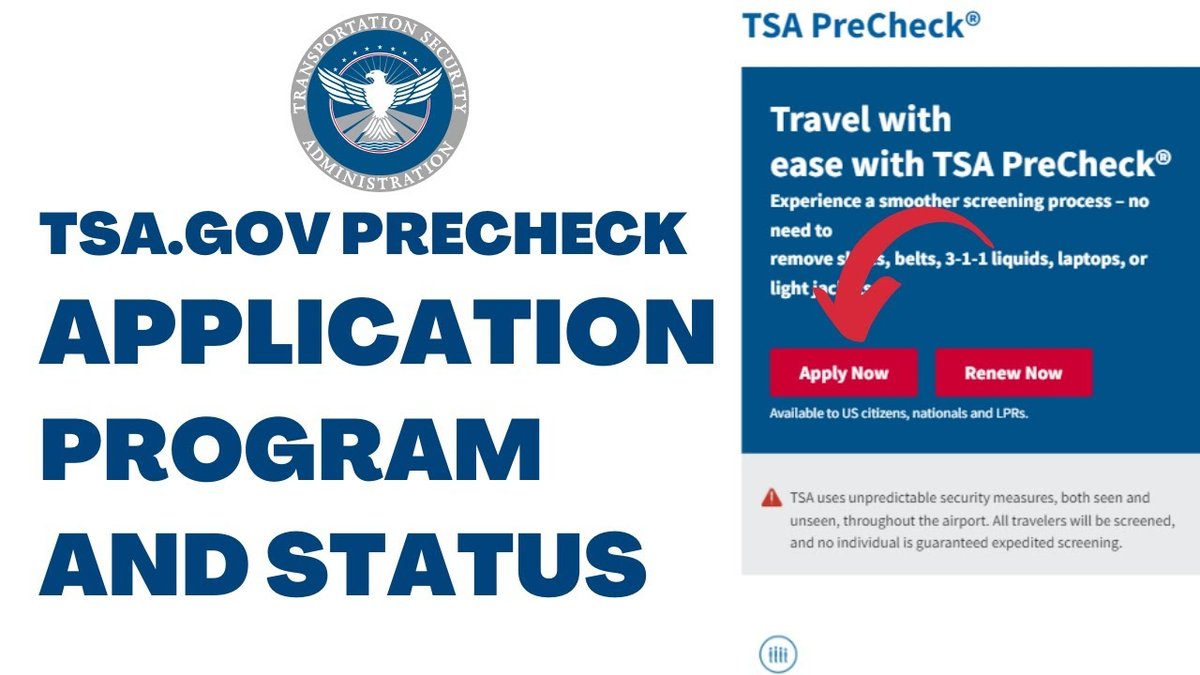
Navigating airport security can feel like a labyrinth, especially for first-time flyers or those infrequent travelers who still dread the routine of removing shoes and unpacking laptops. For many, TSA PreCheck® promises a smoother, faster path through this essential travel hurdle. Yet, despite its popularity, a surprising number of myths and misconceptions about TSA PreCheck® persist, leading to confusion, frustration, or missed opportunities.
As a seasoned traveler and security expert, I’ve seen firsthand how these misunderstandings can impact your journey. It's time to set the record straight and empower you with the correct information, ensuring you maximize the benefits of this Department of Homeland Security (DHS) Trusted Traveler Program.
At a Glance: What You Need to Know About TSA PreCheck®
- Expedited Screening: Enjoy faster security lines at over 200 U.S. airports and with more than 70 participating airlines.
- Keep It On/In: No need to remove shoes, belts, light jackets, 3-1-1 liquids, or laptops from your bag.
- Who Can Apply: U.S. citizens, nationals, and lawful permanent residents are eligible.
- Simple Process: Apply online in minutes, then complete a quick 10-minute in-person appointment.
- Your KTN: An approved Known Traveler Number (KTN) is your key – enter it into every airline reservation.
- Not a Guarantee: Expedited screening is a benefit, not a guarantee, due to evolving security measures.
- Family Travel: Special rules apply to children traveling with a PreCheck adult.
- Renewal: Easy online renewal up to six months before expiration.
- Beyond PreCheck: Global Entry offers customs benefits and includes PreCheck.
Myth 1: TSA PreCheck® Guarantees You'll Breeze Through Security Every Time
Reality: While TSA PreCheck® significantly speeds up your security experience, it doesn't come with a 100% guarantee of express passage.
The promise of TSA PreCheck® is "expedited security screening." This means you'll generally encounter shorter lines and a more streamlined process. You can keep your shoes, belts, and light jackets on, and your 3-1-1 liquids and laptops can stay in your carry-on bag. These perks save precious minutes and reduce the stress of unpacking and repacking at the checkpoint.
However, the Transportation Security Administration (TSA) maintains the right to implement unpredictable security measures. This means that, on rare occasions, a dedicated PreCheck lane might be closed, or you might be directed to a standard lane due to operational needs or enhanced security protocols. It’s important to view PreCheck as a high probability of a faster experience, not an absolute certainty. Always arrive at the airport with enough time, just in case.
Myth 2: You Need a Physical Card to Prove You Have TSA PreCheck®
Reality: There is no physical TSA PreCheck® card. Your Known Traveler Number (KTN) and its presence on your boarding pass are what grant you access.
Many people expect a wallet-sized card, similar to a driver's license, that they can flash at the security checkpoint. But that's not how it works. When you're approved for TSA PreCheck®, you receive a unique Known Traveler Number (KTN). This alphanumeric code is what you need to enter into the 'KTN' field of every airline reservation you make with a participating airline.
Once entered correctly, your boarding pass (digital or printed) will display a "TSA PreCheck®" indicator (e.g., TSAPRECHK, TSA PRE). This indicator is your golden ticket to the expedited lane. The TSA officers simply scan your boarding pass, confirm the indicator, and wave you through. So, safeguard your KTN, and always double-check your boarding pass for that crucial indicator.
Myth 3: Applying for TSA PreCheck® is a Long, Complicated Process
Reality: The application process is surprisingly quick and straightforward, often taking less than 15 minutes of your time in total for the active steps.
Many procrastinate applying, fearing a mountain of paperwork or a lengthy in-person interview. In reality, the process is designed for efficiency:
- Online Pre-enrollment: Start by visiting tsa.gov/precheck to choose an enrollment provider (IDEMIA, CLEAR, or Telos). This initial online step takes approximately 5 minutes, where you fill out basic information.
- In-person Visit: After pre-enrolling, or even as a walk-in, you'll visit an enrollment center. This visit is typically around 10 minutes. Here, your biometric data (fingerprints and a photo) is collected, your identity and proof of citizenship/immigration documents are verified, and you pay the application fee.
- Wait for KTN: Most applicants receive their KTN within 3-5 days. While some applications can take up to 60 days, rapid approval is the norm.
Compared to other trusted traveler programs, PreCheck is indeed one of the quickest to get from application to approval.
Myth 4: Anyone Can Apply for TSA PreCheck®
Reality: While broad, eligibility for TSA PreCheck® is restricted to U.S. citizens, U.S. nationals, and lawful permanent residents.
If you don't fall into one of these categories, you won't be eligible to apply for TSA PreCheck® through its dedicated program. Additionally, certain factors can lead to ineligibility, including:
- Providing incomplete or false information during the application.
- Violating specific federal security regulations.
- Having certain disqualifying criminal offenses in your background.
The TSA performs a thorough background check on all applicants, so it's crucial to be honest and ensure you meet the basic citizenship/residency requirements.
Myth 5: Your Family Automatically Gets PreCheck When Traveling With You
Reality: This is a common point of confusion, especially regarding children. Eligibility depends on age and whether the PreCheck adult is on the same reservation.
The rules for family members in the TSA PreCheck® lane are specific:
- Children 12 and Under: These young travelers can always join an adult with TSA PreCheck® in the expedited lane, even if their own boarding pass doesn't display the indicator. They don't need their own KTN.
- Children 13-17: This age group can join a TSA PreCheck® adult only if the TSA PreCheck® indicator appears on their boarding pass. For this to happen, the child must be on the same airline reservation as the PreCheck adult, and the adult's boarding pass must have the indicator. Do not enter a KTN for a child if they don't have one. If a child in this age range is on a separate reservation, they will need their own KTN to use the PreCheck lane.
- Adult Dependents (18 and over): Adult family members, including spouses, must apply for and receive their own TSA PreCheck® KTN to use the expedited lane. Their benefits are not transferable from yours.
If a child (13-17) frequently travels alone, or an adult dependent travels with you often, it's wise for them to enroll independently.
Myth 6: Your Name on the Application Doesn't Have to Be an Exact Match
Reality: This is one of the most critical and often overlooked details! The name on your application must precisely match your identification documents and future airline reservations.
Even a minor discrepancy—a missing middle name, a misspelled name, or an incorrectly placed hyphen or apostrophe—can prevent the TSA PreCheck® indicator from appearing on your boarding pass.
When you apply, ensure:
- Your full legal name (including middle name) exactly matches your government-issued ID (e.g., passport, driver's license).
- All aliases and former names are included in your application.
- When booking flights, the name on your reservation exactly matches the name associated with your KTN. Even saving your KTN to a frequent flyer profile requires careful attention to matching names.
Take the extra moment to double-check this detail; it's a common reason why approved travelers sometimes don't get PreCheck on their boarding passes.
Myth 7: TSA PreCheck® Works for International Arrivals
Reality: TSA PreCheck® is designed for expedited security screening for flights departing from U.S. airports. It does not expedite your entry into the U.S. from international travel.
Many assume PreCheck will help them bypass long lines at U.S. Customs and Border Protection (CBP) upon returning from abroad. This is incorrect. PreCheck is solely for the security checkpoint before a flight.
If you travel internationally four or more times a year, you should consider Global Entry. This DHS Trusted Traveler Program provides expedited U.S. customs screening for international air travelers when entering the United States and includes TSA PreCheck® benefits. NEXUS and SENTRI are other programs that also offer PreCheck benefits along with expedited border crossings.
Myth 8: Once You're Approved, You're in for Life (or for the Full 5 Years, No Matter What)
Reality: All TSA PreCheck® enrollees undergo recurrent criminal history vetting. Certain violations or new criminal records can lead to temporary suspension or permanent disqualification.
Enrollment in any Trusted Traveler Program is a privilege, not a right. The TSA continuously vets participants to ensure they continue to meet eligibility requirements. Reasons for disqualification or suspension include:
- Federal Security Regulation Violations: This can range from making a bomb threat to interfering with flight crew or security operations, or bringing firearms/explosives to a checkpoint.
- New Criminal Offenses: If you commit a disqualifying criminal offense after your initial approval, your KTN can be suspended or revoked.
Suspensions can last up to 5 years for a first offense or be permanent for egregious incidents or repeat violations. While temporary suspensions (under 30-90 days) might occur during routine vetting, time lost due to violations is generally not returned. If you believe you've been incorrectly disqualified, there are processes for reconsideration or redress.
Myth 9: It's Too Expensive for the Benefits It Offers
Reality: The cost for a 5-year membership is quite affordable, and many travelers find the time savings and reduced stress well worth the investment.
The fee for a 5-year TSA PreCheck® membership varies slightly by enrollment provider but typically ranges from $78-$85. This breaks down to roughly $15-$17 per year, or just over a dollar a month.
Furthermore, many premium credit cards and loyalty programs offer reimbursement for the TSA PreCheck® application fee as a cardholder benefit. Check with your credit card issuer or airline loyalty program to see if you qualify for this perk, potentially making your membership free. When you weigh the cost against the hours saved in line over five years, not to mention the improved airport experience, it’s a small price to pay for frequent flyers.
Myth 10: If You Don't See PreCheck on Your Boarding Pass, There's Nothing You Can Do
Reality: While frustrating, a missing PreCheck indicator isn't always a lost cause. There are specific troubleshooting steps you can take.
If you arrive at the airport and your boarding pass lacks the "TSA PreCheck®" indicator, don't despair immediately:
- Check KTN Expiration: First, confirm your KTN is still active and hasn't expired.
- Verify Information with Airline: Contact your airline to ensure your KTN, full name, and date of birth are accurately entered in your reservation. Even a small typo can cause issues. Also, confirm the airline participates in the PreCheck program.
- Contact TSA: If the problem persists, reach out to AskTSA (dial 275-872) or use the TSA Contact Center online form. It's best to do this within 72 hours of the issue occurring.
- At the Checkpoint (No Dedicated Lane): If there's no dedicated PreCheck lane, but you have the indicator on your boarding pass, politely ask the TSA officer in the standard lane if you can still keep your shoes, belt, light jacket, 3-1-1 liquids, and laptop in your bag. They may or may not accommodate, but it's worth asking.
Being proactive and knowing these steps can often resolve the issue, getting you back to the expedited experience you paid for.
Myth 11: All Military Personnel and DoD Civilians Automatically Get PreCheck for Their Entire Families
Reality: While Active Duty U.S. Armed Forces members and DoD Federal Civilians receive free TSA PreCheck®, the benefits do not automatically extend to adult dependents.
This is a generous benefit for those serving our country, but it has specific limitations:
- Eligible Personnel: Active Duty U.S. Armed Forces members, DoD Federal Civilians (who opt-in via a specific website), and cadets/midshipmen of U.S. Military Academies qualify. U.S. Merchant Marine Academy cadets use their TWIC program's Credential Identification Number as their KTN.
- Usage: Eligible personnel use their DoD ID number as their KTN for both official and personal travel. It's crucial not to present a Common Access Card (CAC) at the checkpoint; the PreCheck indicator must be on the boarding pass.
- Dependents: These benefits do not extend to non-DoD affiliated military adult dependents (18 and over). They must enroll separately to receive PreCheck. For children, the same rules apply as for general PreCheck enrollees (ages 12 and under travel with the adult; 13-17 need the indicator on their boarding pass if on the same reservation).
- Post-Service: Once an individual leaves the DoD, these free benefits cease, and they must enroll separately if they wish to continue using TSA PreCheck®.
Myth 12: Renewing TSA PreCheck® is as Complex as the Initial Application
Reality: Renewing your TSA PreCheck® membership is generally much easier than the initial application, often requiring only an online process.
The TSA makes renewal quite user-friendly:
- When to Renew: You can renew online up to six months before your current membership expires. The new 5-year period begins immediately after your current one ends, so you don't lose any time by renewing early. The TSA recommends renewing at least 60 days prior to expiration to avoid any lapse in benefits.
- Notifications: Expect renewal notifications via email or phone at 6, 3, and 1 month, and 2 weeks before expiration.
- Process: Most applicants can complete the renewal entirely online through any enrollment provider. An in-person visit is usually only required if you've had a legal name change that hasn't been updated with the TSA.
- Your KTN Stays the Same: A significant convenience is that your KTN remains the same after renewal.
This streamlined renewal process ensures that once you're in the system, maintaining your benefits is hassle-free.
Essential Tips for a Seamless TSA PreCheck® Experience
Beyond debunking myths, here’s some actionable advice to make the most of your TSA PreCheck® membership:
- Always Enter Your KTN: Make it a habit to enter your KTN every time you book a flight, regardless of the airline or booking method. Save it to your frequent flyer profiles.
- Double-Check Your Boarding Pass: Before heading to security, always confirm the "TSA PreCheck®" indicator is present on your boarding pass.
- REAL ID Readiness: Remember that regardless of your PreCheck status, all travelers will eventually need a REAL ID compliant license or another acceptable form of identification (like a passport) to fly domestically. Check the enforcement date for your state.
- Medical Conditions/Disabilities: If you have metal implants, a pacemaker, or other medical devices, inform the TSA officer. With a PreCheck indicator, you may request Advanced Imaging Technology (AIT) screening prior to a metal detector to keep shoes on. If you have special circumstances or need assistance, contact TSA Cares helpline (72 hours prior to travel) for support.
- Beware of Fraud: Only use official government websites (tsa.gov/precheck or dhs.gov/ttpr) to apply or renew. Scammers create fake websites that charge exorbitant fees or steal personal information. TSA does not issue refunds for applications processed through fraudulent sites.
- Lost Your KTN? If you forget your KTN, you can easily look it up through your enrollment provider (IDEMIA, CLEAR, Telos) or the Trusted Traveler Programs website if you're a Global Entry/NEXUS/SENTRI member.
- Need Help? AskTSA: For any questions or assistance, the AskTSA social media team (via X or Facebook Messenger) and the TSA Contact Center (online form) are reliable resources. If you received a notice of violation, contact the assigned case agent directly.
Empowering Your Journey: Confidence Through Clarity
TSA PreCheck® is an invaluable program that enhances the travel experience for millions. By understanding the true mechanics, eligibility, and limitations—and dispelling the common myths—you can approach airport security with confidence and ease. The time saved, the stress reduced, and the smoother process all contribute to a more enjoyable start to your trip, whether for business or leisure.
So, go forth and travel smarter. Your journey, after all, should be about the destination, not the delays.